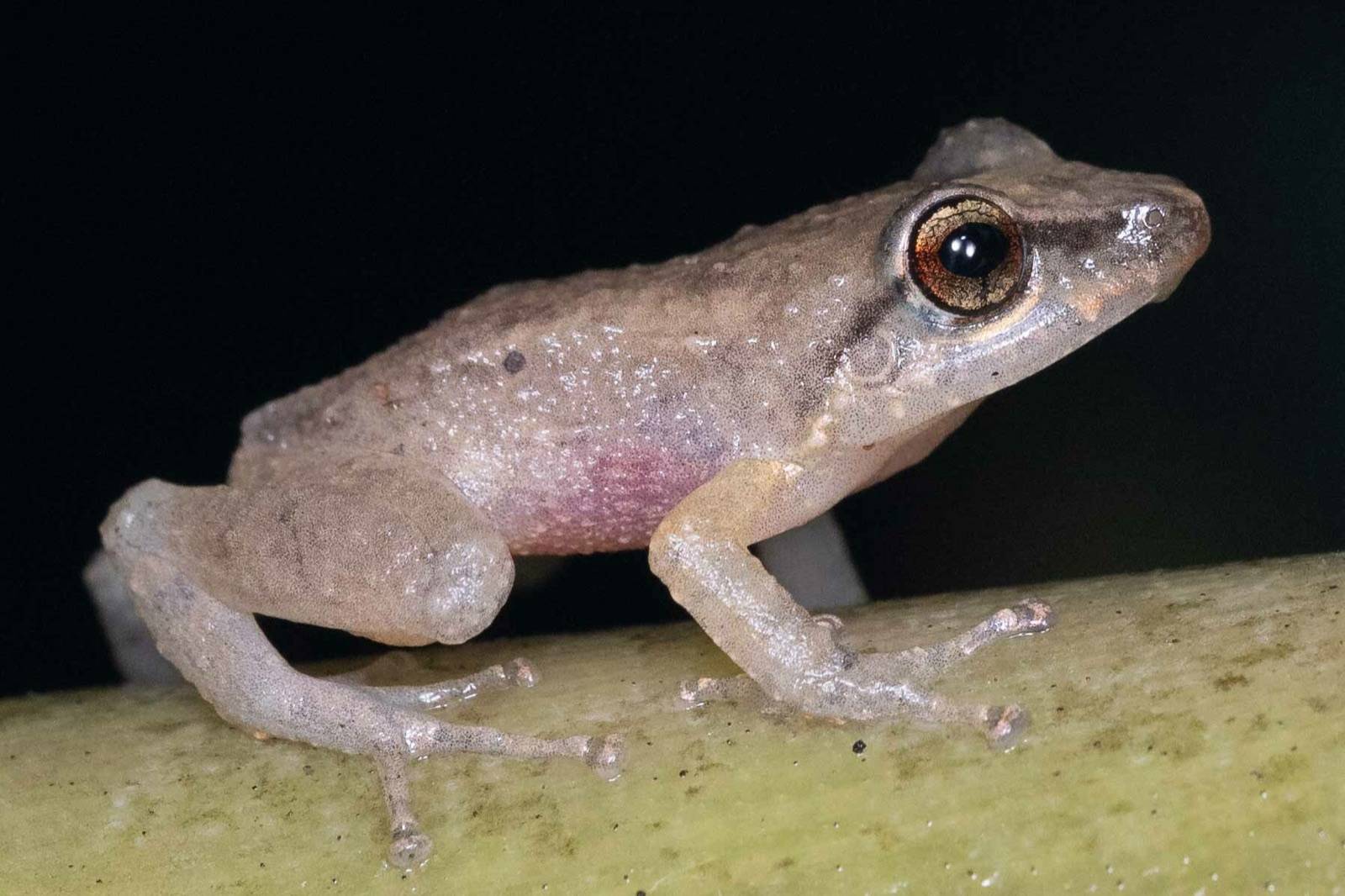
“I Have a Coqui Chirping in My Yard!”
The frog you hear may not be the only frog in your yard.
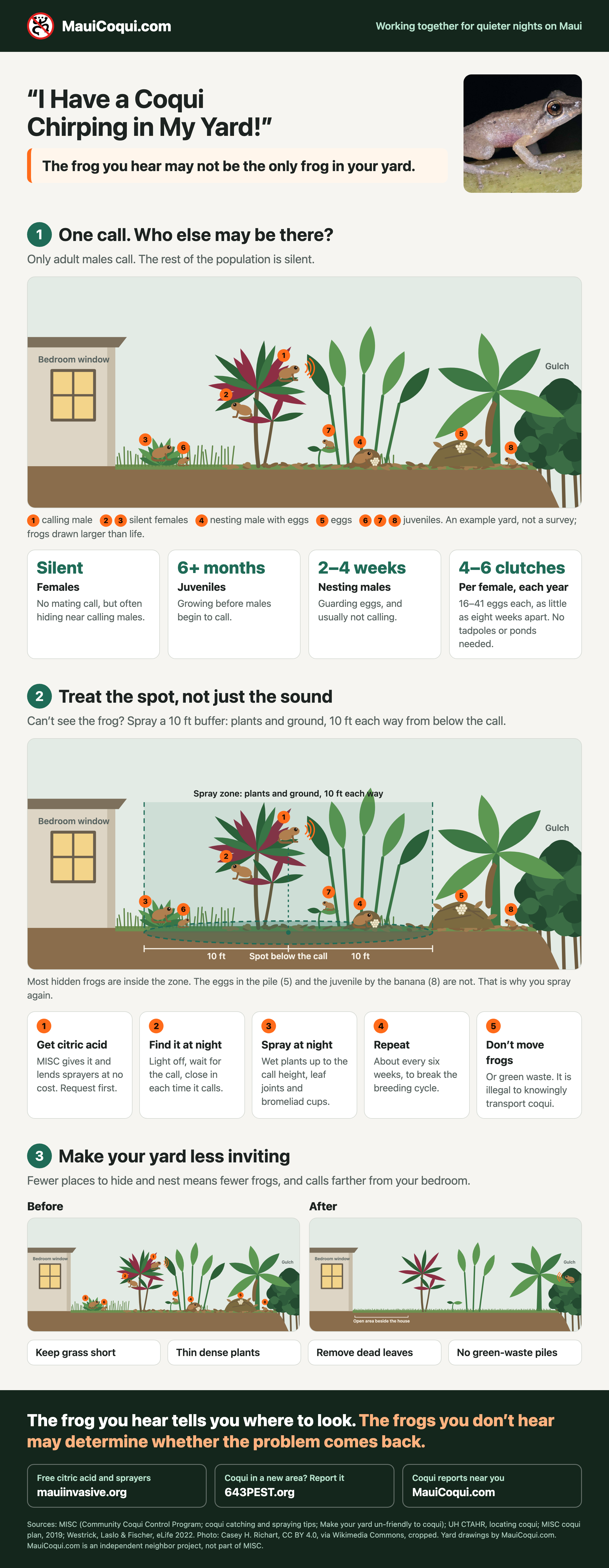
1One call. Who else may be there?
Only adult males call. The rest of the population is silent.
Swipe to see the whole yard.
- SilentFemales
No mating call, but often hiding near calling males.
- 6+ monthsJuveniles
Growing before males begin to call.
- 2–4 weeksNesting males
Guarding eggs, and usually not calling.
- 4–6 clutchesPer female, each year
16–41 eggs each, as little as eight weeks apart. No tadpoles or ponds needed.
2Treat the spot, not just the sound
Can’t see the frog? Spray a 10 ft buffer: plants and ground, 10 ft each way from below the call.
Swipe to see the whole yard.
- Get citric acid
MISC gives it and lends sprayers at no cost. Request first.
- Find it at night
Light off, wait for the call, close in each time it calls.
- Spray at night
Wet plants up to the call height, leaf joints and bromeliad cups.
- Repeat
About every six weeks, to break the breeding cycle.
- Don’t move frogs
Or green waste. It is illegal to knowingly transport coqui.
3Make your yard less inviting
Fewer places to hide and nest means fewer frogs, and calls farther from your bedroom.
Before
After
- Keep grass short
- Thin dense plants
- Remove dead leaves
- No green-waste piles